Boosting Credibility with Editorial Consistency Never Goes Out of Style
Content creators face a variety of editorial considerations, some obvious and others less so, that can enhance or hurt a brand’s identity, from minimizing typos and grammar mistakes to using the right amount of jargon and selecting typefaces. It can be a lot to keep in mind, especially when some editorial choices need to be tailored for different clients.
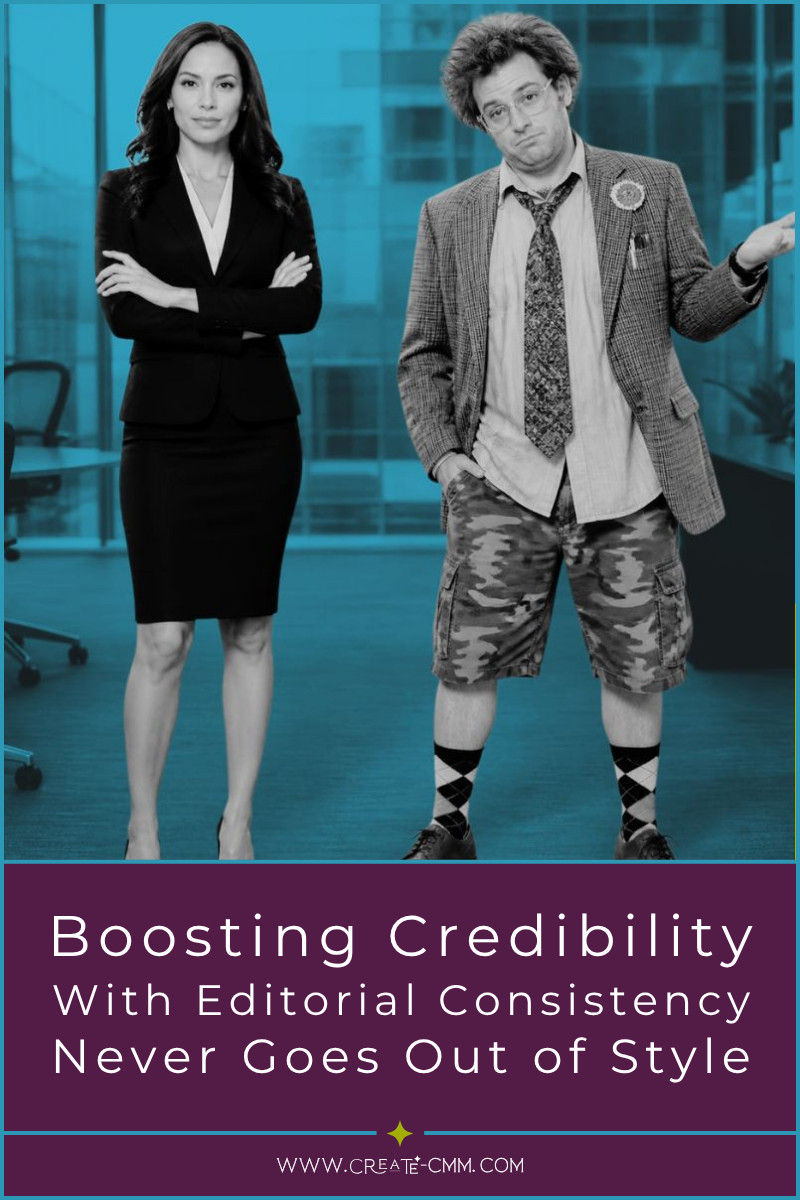
That’s why an editorial style guide is one of the most useful tools for writers, editors and brands. A style guide establishes a set of rules for written content to ensure consistency and uniformity across an organization’s internal and external content. When style guides are followed, they can promote an almost-subliminal message of credibility, something every brand wants to project. Eagle-eyed readers might pick up on format inconsistencies quickly, others may take longer to notice them. Either way, the lack of attention to detail comes across as sloppy and unprofessional.
Just as factual errors, grammar mistakes and typos undermine an organization’s credibility, so can the haphazard formatting of content. Formatting includes the nuts and bolts of publishing content, for example, how headlines, subheads and other elements are written and displayed; when to use abbreviations; and even whether paragraphs are set off with an indent, a double space or both. A style guide can spell out which overused jargon or cliches should be avoided and how to attribute sources, whether through links, footnotes or endnotes, or by referencing the source in the copy. It can also address the brand’s “voice”—how the company speaks to its audience, which can range from formal to casual, and vary depending on the type of content and the target.
The New York Times, for example, subtly promotes its brand as a leading news outlet with a distinctive style that sets it apart from other publications, which includes inserting periods into accepted acronyms, such as A.I. instead of AI, I.R.S. not IRS and N.F.L rather than NFL. The newspaper is also known for giving sources courtesy titles such as Mr., Ms., Mx. and Dr. on second reference, at least in certain sections. It decided a few years ago to drop those titles in sports and pop culture stories.

An organization’s style guide doesn’t need to reinvent the wheel, of course. Many are based on existing industry-specific editorial guidelines, such as the Chicago Manual of Style in the publishing world and the Modern Language Association (MLA) Style in academia. The Associated Press (AP) Stylebook is the widely used journalism bible but also serves as a starting point for many organizations, which then add their own editorial approaches and preferences for formatting content including blog posts, proposals, case studies, employee bios, press releases and social media posts.
Apple’s 244-page style guide states upfront that the company follows the style and usage rules according to the Chicago Manual of Style and Merriam-Webster’s Collegiate Dictionary. Last updated in June, the style guide proceeds to cover everything from abbreviations to when to use “Zoom” or “zoom,” followed by sections on writing inclusively, units of measure, technical notation and international style.
Not every organization needs such detailed editorial guidance but there are benefits to documenting as much as possible. A thorough style guide can increase an organization’s efficiency by getting everyone on the same page editorially, eliminating guesswork and reducing errors.
It can even help improve employee relations by squashing arguments over discretionary grammar preferences like Oxford commas and em-dashes. It’s smart to take a stand in writing because the debates can get pretty heated out there.
Featured Articles