The Visibility Imperative: Reframing Lawyer Bios for an AI-Shaped Market
A version of this article was originally published in For the Defense here on February 17th, 2026
Last month a client asked me to give a workshop on attorney bios to a group of their associates. The workshop was in person at one of their offices and with video feeds to two others. I haven’t done an in-person bio workshop or “bio day” where I meet with lawyers in one-on-one sessions since right before the pandemic.
In fact, I had a workshop scheduled for the same client in March 2020 that was cancelled. So much has changed since that time. The way we work, the way we use technology, the color of my hair.
The workshop I would have given almost six years ago is as outdated as my headshot.
Back then, my mission was to eradicate bland, boring and formulaic bios—bios that read like résumés in paragraph form, conveying information about practice areas, experience and representative matters, but often failing to capture the human behind the credentials or to differentiate one lawyer from another. Humans were reading your bios, I argued, and they want to find the answer to the essential question: Are you the right lawyer for me?
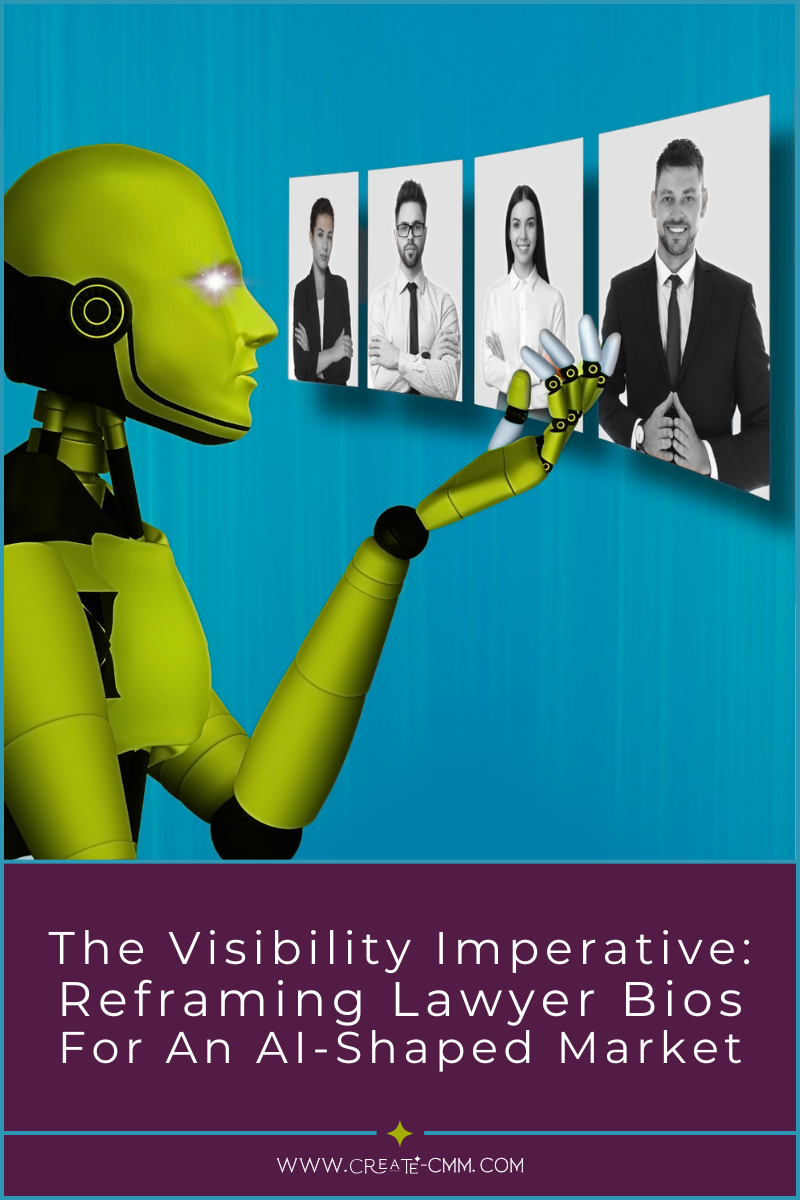
While the primary functions and fundamentals of attorney bios remain true—human readers still use bios to get information about other humans—the operating environment has changed. Artificial intelligence now acts as a gatekeeper, shaping the information that’s delivered to those making decisions about legal services hiring, associate recruiting, internal talent and staffing assessments, and lateral talent acquisition.
Attorney bios are read by people, but often before that happens, they are parsed, ranked, summarized and compared by machines. Bios have become an essential source of data and content for AI-enabled technology, and their quality, structure and content impact which lawyers—and firms—get surfaced, promoted and, ultimately, hired.
In other words, attorney bios have to remain human-centric, while also meeting the technical demands of AI-enabled discovery.
A mindset shift: from static page to dynamic dashboard
Web bios have been a fundamental (if often ignored) marketing tool since long before AI became everyday technology. A primary destination for website visitors, trailing only the homepage as the most visited page on sites, they consistently drive an estimated 80% of total website traffic. They are also read three times more than any other page on a firm's site, including services and capabilities descriptions.
This is, in part, because bios have multiple audiences and multiple uses for those audiences.
We tend to think of bios primarily for marketing and business development, and clients do use bios as important information sources, both in the initial research phase and in making final hiring decisions. Current clients are also repeat visitors to web bios, using them as a kind of one-stop dashboard for multiple needs: to validate their hiring decisions to themselves and their stakeholders; to ensure personal, cultural or value “fit”; to identify lawyers with specific—often niche—legal, industry or regulatory expertise, technological skills or regional reputation; to stay current on trends and developments through thought leadership and other content; and for essential contact details and links to professional social media profiles like LinkedIn.
In addition to current and prospective clients, the list of bio users includes both internal and external referral sources; opposing counsel and co-counsel; judges, arbitrators and mediators; journalists and media outlets looking for expert commentary on legal developments; event organizers looking for speakers with specific subject matter expertise; and legal recruiters and executive search firms.
And while we think of them as client- or external-facing, bios are an essential internal professional development and talent assessment resource, used by partners and practice leadership for matter staffing, and by marketing and business development professionals as a centralized database of the firm's collective expertise for pitches, proposals and RFPs.
None of this is new, of course, but AI-based technology puts into sharp relief the need for lawyers—and firms—to shift their thinking from viewing attorney bios as static web pages to dynamic digital resources, with the primary objective of enabling diverse audiences to find what they are looking for as quickly and easily as possible.

AI-enabled search changes the dynamic
Different audiences come to website bios in different ways—internet searches; links to web bios in outside sources or from other parts of the website, and filtered searches on the people page based on practice or sector, office location, role, schools, clerkships or other criteria.
Increasingly, however, AI-enabled technology is playing a role. Search engines like Google and Bing include AI-generated summaries at the top of their search results and have AI features that enable users to ask questions rather than search using keywords. Clients and others are also using generative AI platforms like ChatGPT or Perplexity, rather than search engines, for their internet research. These platforms allow users to ask detailed, plain-language questions such as "Who are the best private equity lawyers in Pittsburgh with experience in health care, life sciences and pharma?” or substantive legal questions such as “What health care-related private equity reporting requirements are in effect in PA?”
AI-enabled search and genAI tools function differently, but their impact is similar: they act as gatekeeping intermediaries, reviewing and synthesizing information, generating answers and citing sources. If the AI tool doesn’t recognize the content of the lawyer or firm (including bios) as a credible, relevant and authoritative source, it won’t appear in the output.
AI systems evaluate content including bios not as standalone pieces, but as part of the lawyer’s—and the firm’s—larger digital footprint, on the website and across other platforms such as social media, third-party publications and other websites.
In other words, individual lawyer bios also impact the firm’s visibility in AI-generated answers and search results.
E-E-A-T for machines and humans
Many of the content elements that AI systems look for reflect those that human readers value too.
Search engines and generative AI systems place great weight on experience, expertise, authoritativeness and trustworthiness—often abbreviated E-E-A-T. While these elements have specific meaning and value in how search engines and AI systems rank, summarize and cite all kinds of content, they also serve as excellent guideposts for optimizing bios for both humans and machines.
We tend to focus on the narrative as the key element of the bio, but just as human readers may read a couple of paragraphs of the narrative, scan the list of representative matters or look at educational credentials and professional accolades to get a sense of who the lawyer is and what they do, AI systems look for consistent E-E-A-T signals across all of the elements of the bio.
For example, a narrative and select representations list that describe the specific work the lawyer does, the types of clients they serve, the problems they solve and the industries and sectors in which they work, conveys experience. Expertise—that the lawyer knows the law—is established through educational credentials and certifications, robust thought leadership, speaking engagements and other content on specific legal topics, and links to capabilities, services and sectors pages on the website. Authoritativeness is based on third-party recognition of expertise, signaled through awards and recognitions, professional affiliations, speaking engagements, publications and media mentions. And trustworthiness signals for both AI and humans include clear, consistent and up-to-date details such as name, title, firm and contact information, as well as updated headshots.
Specificity and depth matter to both AI systems and humans. Bio using broad or generic language such as “handles complex litigation matters” or “focuses on advising clients across a range of industries” don’t provide any real or differentiating information, and overly promotional language and excessive use of superlatives don’t resonate with human readers. They also dilute E-E-A-T for AI. Bios that talk in concrete terms about matters, outcomes and the specific roles the lawyer played give human readers the information they need and AI systems the trust and value signals they require.
Clear organization, consistent language and deliberate use of headers, sections, white space and lists also improve scannability for human readers, who have short attention spans and little time, and who want quick answers. They also signal trustworthiness to AI systems.
Human-centric first
Despite the growing impact of AI in legal hiring, I’m not suggesting bios should be written for AI algorithms. While AI tools shape the way information about lawyers and firms is filtered, packaged and delivered, humans are still making hiring decisions (at least for now). The most effective bios balance AI discoverability with human engagement and authenticity, establishing E-E-A-T while still conveying a sense of the lawyer behind the credentials.
Featured Articles